

· AFX Research
Title Search When You Inherit a House With Siblings
Three siblings inherit a house and discover nobody can sell it alone, a judgment against one of them is attached to the property, and a cousin nobody tracked down still owns a share. Here is what to check first.
Table of Contents
A parent dies, the will leaves the house to three children, and everyone assumes the hard part is deciding whether to sell. The hard part is usually the title, because co-owned inherited property behaves differently from property one person owns, and the differences only surface when somebody tries to do something with it.
Nobody owns a part of the house
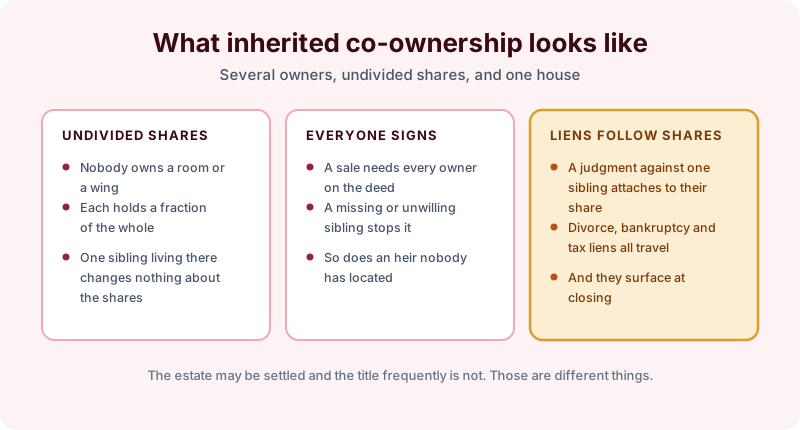
Co-owners hold undivided shares. Each sibling owns a fraction of the whole property rather than a room, a wing, or the back half. The sibling who lives there does not own more of it, and the one who paid for the new roof does not either, although contribution claims can be made separately.
That matters the moment anyone wants out. A co-owner who cannot reach agreement can generally ask a court to divide or sell the property, which is a blunt and expensive remedy that tends to concentrate minds once somebody mentions it. The record is where any of that starts, and it connects to the chain work in a quiet title action.
Everyone has to sign
A sale needs every owner on the deed. One sibling who refuses stops it, and so does one nobody can find — and missing heirs are more common than families expect, particularly where a sibling predeceased the parent and their children inherited that share.
A search of the parcel plus the names shows who is actually on title now, which is frequently not the list the family has in mind. Sometimes a share passed to a spouse rather than to children. Sometimes a deed everyone forgot about moved the house into a trust years ago. The estate being closed and the title being clean are two different facts, as our note on title search for inherited property sets out.
Liens follow the share
This is the finding that disrupts closings. A judgment against one sibling attaches to that sibling’s undivided share, and it travels with the property into the sale. Divorce liens, child support liens, tax liens and bankruptcy filings all do the same.
So a search has to run every co-owner’s name, not just the parcel and not just the person handling the sale. One sibling’s financial trouble becomes everybody’s closing delay, and it is usually discovered by the title company a fortnight before closing rather than by the family a year earlier.
What to check before you list it
Confirm who holds title of record today and in what shares, run each owner’s name for liens and judgments, and establish whether any probate step is still outstanding. Then look for anything the parent recorded late in life, such as a transfer on death deed or a life estate, which can change who inherited what.
The bottom line
Do the title work before the family agrees a plan, not after a buyer is waiting. Order online with the address and every sibling’s name, or ask us what a search of that scope would cover before you order.