

· AFX Research
Water and Sewer Liens and Your Title Search
Unpaid municipal water and sewer charges can attach to the property rather than the person who ran them up, and in some places without anything being recorded. What the search catches, and what must be ordered separately.
Table of Contents
An unpaid utility bill sounds like a personal debt. In many jurisdictions it is a claim against the land instead, and it can sit ahead of the mortgage in priority — which is why a small water balance sometimes causes more trouble at closing than a large judgment.
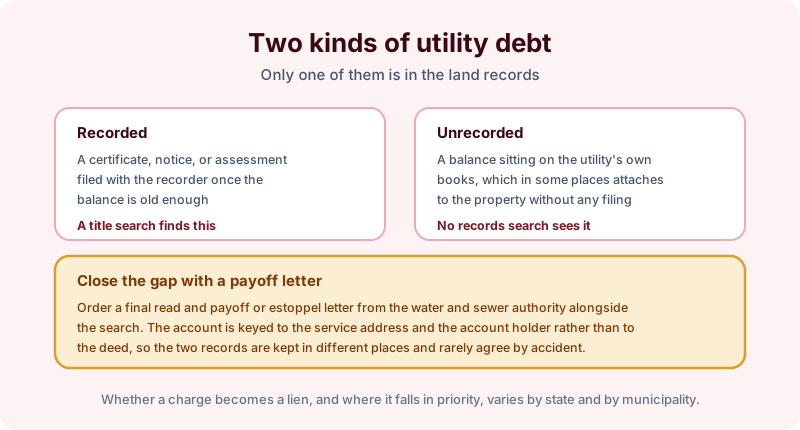
How a utility bill becomes a claim on the land
Water and sewer service is usually provided by a municipality or a public authority rather than a private company, and the enabling statutes commonly let the provider treat delinquent charges the way a tax is treated. Practically, that means the debt is enforced against the parcel that received the service. Some providers must record something first, some can certify the balance to the tax roll so it rides along with the property taxes, and some hold a statutory lien that exists from the moment the bill goes unpaid.
Which of those applies is entirely a matter of state law and local charter, and the differences are large. Never assume the treatment in one county carries to the next.
Recorded, unrecorded, and why the distinction matters
A recorded certificate, notice, or assessment shows up in a search of the land records, dated and copied, exactly like a code enforcement lien. An unrecorded balance does not, because there is nothing in the recorder’s index to find. Where charges are certified to the tax roll, they behave like the tax items covered in do property taxes show up in a title search, and the current-year figure often is not in the record either.
That is a genuine limit rather than a gap in diligence, and it belongs with the other items in what a title search cannot find.
When a tenant ran up the bill
This is where owners are most often surprised. If the claim attaches to the property, the fact that a tenant held the account and left owing money frequently does not move the obligation. Some jurisdictions limit how far back a provider can reach or require notice to the owner first; others do not. A buyer acquiring a rental with a history of turnover should treat the utility account as its own diligence item.
What to order alongside the search
Ask the water and sewer authority for a final read and a payoff or estoppel letter. The utility account is keyed to a service address and an account holder, while the title search is keyed to a legal description and an owner, so the two sets of records live in different offices and rarely line up by themselves. Ordering both is how the closing statement ends up complete.
The bottom line
Run the title search for anything recorded, and get a written payoff from the provider for everything that is not. Order online, or ask us and we will tell you what the recorder in that county actually carries for utility claims before you order.